Bamboo, examined
A grass that reaches full height in a season, and what the evidence says about brushes made from it.
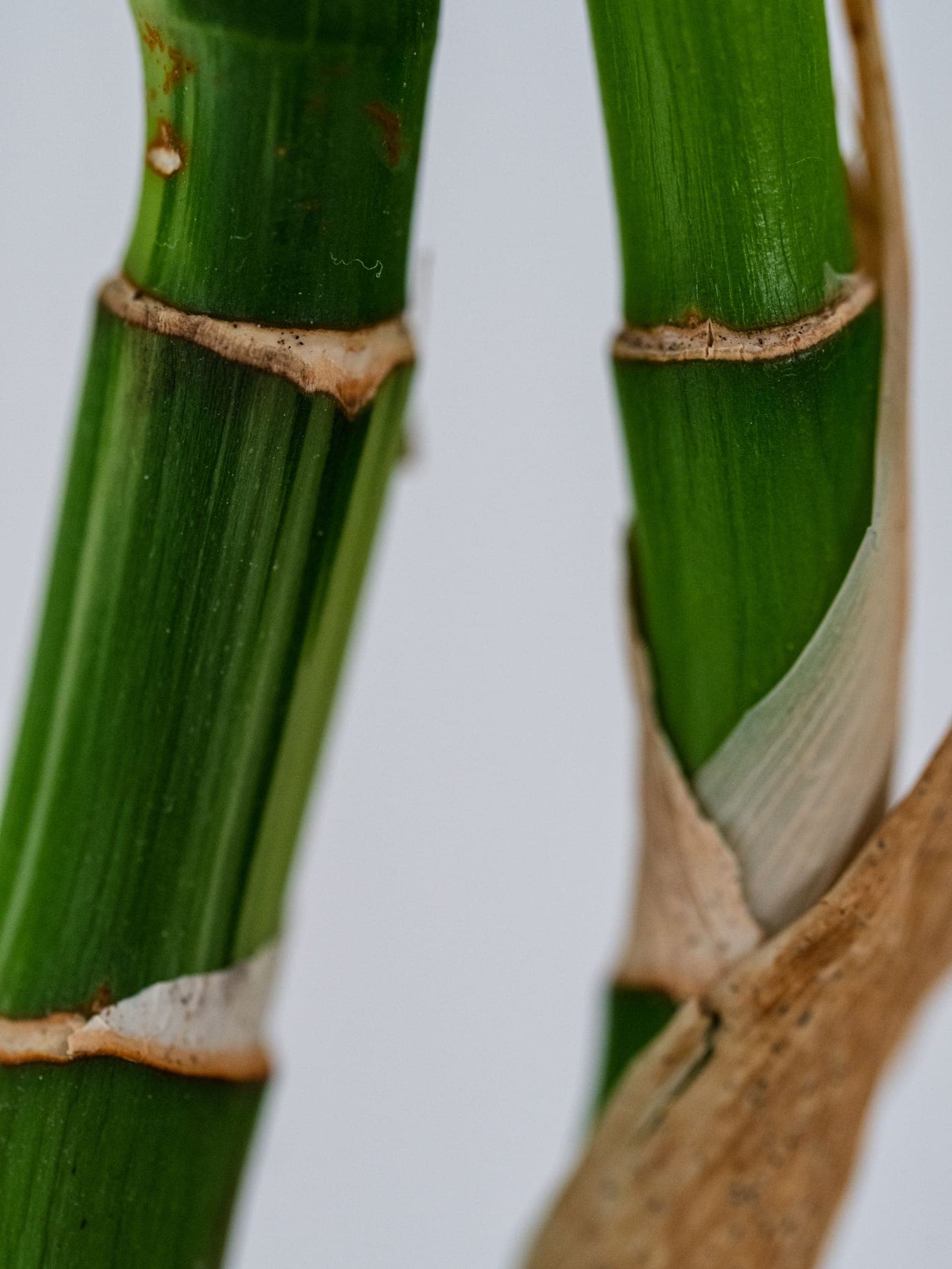
Bamboo is not a tree. It is a grass, and it behaves like one: a culm reaches its full height in a single growing season, then spends a few years hardening. A hardwood of comparable stiffness asks for decades. For a small object that is replaced several times a year, that difference in tempo matters.
As a handle it does its work quietly. It is light, hard enough to hold its section, and it stands being wet a dozen times a day — provided it is allowed to dry. That proviso is real: left in a puddle, any wood suffers. Dry upright, head free.
What the evidence says
In 2020, researchers at University College London and Trinity College Dublin published a life cycle assessment in the British Dental Journal, using the toothbrush as a model for weighing healthcare against environmental cost. They compared four brushes over five years of use: a plastic manual brush, a manual brush with a replaceable head, a bamboo manual brush, and an electric one.
The electric brush carried the greatest burden in fifteen of sixteen impact categories. The bamboo brush and the replaceable-head brush carried the lowest. The authors are careful, and so are we: they note that a brush of continuously recycled plastic could, in principle, do better still, because bamboo's advantage is in growing, not in being processed and shipped.
The same study makes a point most marketing omits: for a manual brush, much of the lifetime impact is the tap water running while you brush. The cheapest improvement to any brushing routine is a closed tap.
What this means for the brush
We chose bamboo because it serves: it grows at the pace the object is used, it needs no coating, and it goes to soil when the bristles are done. We do not claim it saves the world. It is a sound handle, honestly sourced, that does not outlive its welcome by four hundred years.